

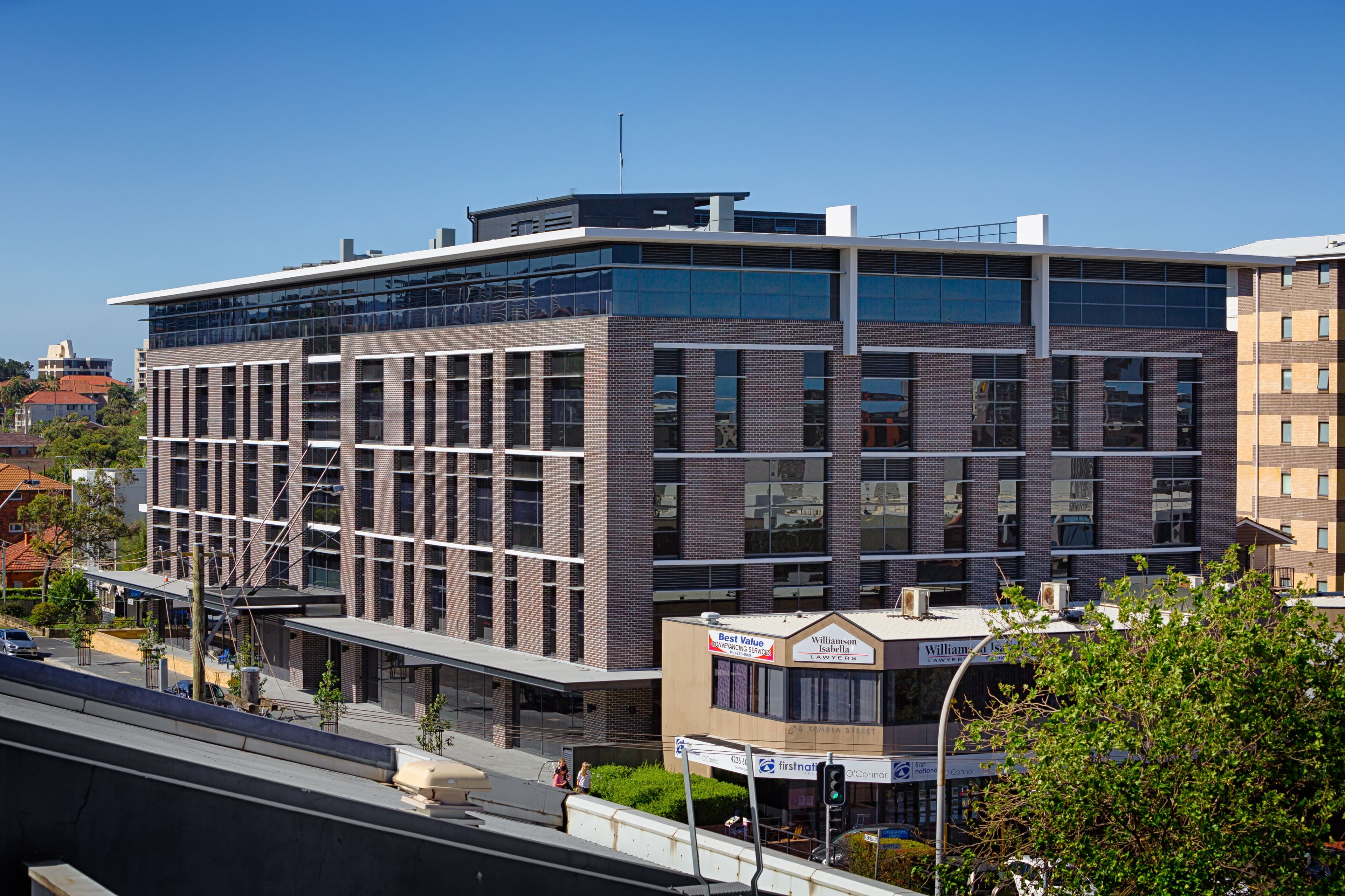
Castlerock has developed a pathway to (supporting its target of net zero) reach net zero base building operational emissions at 45–53 Kembla Street, Wollongong, by FY30.
The pathway sets out how the emissions Castlerock controls at the building will be reduced over the next four years, measured from an FY26 baseline. It is an initial step in Castlerock’s work to plan emissions reductions property by property.
What the pathway covers
The pathway applies to base building operational emissions: emissions from the shared building services that Castlerock controls as owner. These are:
The pathway covers emissions associated to the base building operation under Castlerock’s operational control.
- electricity purchased to run base building services
- natural gas used for heating
- refrigerant leakage from air-conditioning equipment
It does not include electricity or other emissions controlled by tenants, embodied carbon in building materials, or other Scope 3 emissions, such as those associated with purchased goods and services.
The FY26 baseline is provisional and is being verified.
FY26, covering 1 July 2025 to 30 June 2026, is the proposed baseline year. The emissions inventory and calculation methodology are being checked before the baseline is finalised.
“This pathway provides a practical framework for planning reductions in emissions from base-building operations at Wollongong. Our focus is on improving energy efficiency, assessing the replacement of gas heating with electric alternatives, and measuring progress. Proposed upgrades remain subject to feasibility, funding and approval. Lessons from this work will help us assess opportunities at other properties across our portfolio.”
— Elizabet Acosta, ESG Manager, Castlerock
Reducing emissions first
The pathway follows a reduce, optimise and offset hierarchy. The priority is to lower energy demand and remove fossil fuel use through efficiency improvements and electrification, followed by optimising building systems and the use of renewable electricity. Any residual emissions from base-building operations would be quantified and verified before determining the quantity of carbon credits required. Suitable credits would then be purchased and retired to offset those emissions. Offsets would complement emissions reductions and would not mean that the building produces no emissions.
Renewable electricity is already part of the building’s supply. The building has an existing 61.75 kW solar system, and since April 2026, accredited GreenPower has been purchased to match 98.98% of the base building’s grid electricity. A feasibility assessment will consider adding further solar generation and battery storage.
Moving away from gas
The largest planned change is replacing the building’s 150 kW gas boiler with electric heat pumps, scheduled for FY29. This work is subject to technical feasibility, available electrical capacity, funding and approval.
Staged replacement of the building’s variable refrigerant flow (VRF) air-conditioning equipment is under development. The timing and scope of these and other upgrades, including an assessment of the building’s electrical capacity, will be confirmed through Castlerock’s lifecycle and capital planning for the asset.
Measuring progress
Progress will be measured against the verified FY26 baseline, and results will be reported with the pathway’s boundary clearly stated.
The pathway is a target for future performance, not a description of the building today: 45–53 Kembla Street is not currently net zero.
Applying the lessons
Lessons from Wollongong will help Castlerock assess whether similar pathways suit other properties in the portfolio, depending on each building’s circumstances and feasibility.
To learn more about Castlerock’s approach to sustainability, visit our ESG page.